Fun facts about Italy and Italians for adults and children, the most interesting traditions and customs of the country. What did the Italians invent and what do they suffer most from? What they believe in, how they dress, what they prefer to give, are common superstitions in Italy. Eurotraveler explains why, according to the Italian tradition, people in the Appennines like black and are in no hurry to give up the siesta.
Italy is a European country that is well developed technically and culturally excellent. It has a number of interesting features and scrupulously observed traditions that make it “not like the others.”
Bright and original, to the extent that tourists like it when they go to see Venice or Rome and bring back an incredible amount of impressions. Sometimes, however, travelers will be disappointed.
After all, some of the Italian customs can create serious problems for punctual people. Or, for example, for those who are not used to paying attention to far-fetched restrictions.
Ordinary, completely average tourists often face inconveniences. Those who behave cautiously and carefully abroad, but sometimes simply do not know about the existence of any special rules and exceptions.
And the everyday reality in Italy is replete with interesting facts and features. Although, fortunately, not as much as anywhere in China.
To minimize the risks and bring only positive emotions from the trip in addition to souvenirs, read our material carefully! Which will surely help you not only prepare, but also just understand how Italians think and live.
Facts from the History of Italy and…
Italy is a predominantly Catholic country with an incredible number of churches. The number of temples per capita exceeds that in any other country in the world.
It’s great that there are very few visitors, even in large churches. And to make sure of this, you don’t need much – just go to the first temple that meets you on the way.
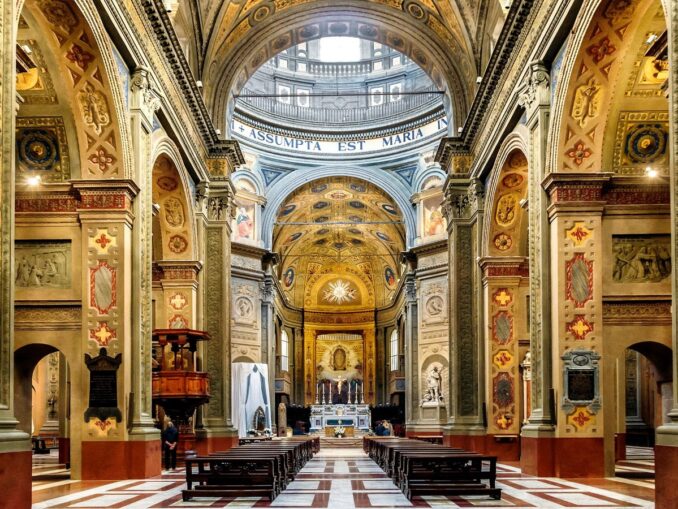
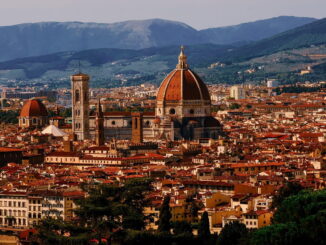
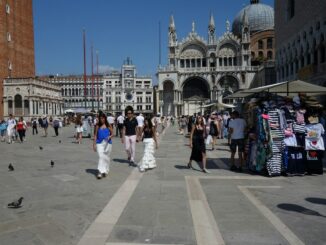
At the same time, of course, one should not deny the immutable but interesting fact that the main cathedral of Italy, St. Peter in Rome, even in the “lowest” months of the year, is crowded with visitors. The Duomo in Florence is never empty, and a river of people constantly flows inside St. Mark’s Basilica in Venice.
Well, all the time, shortly before 5 p.m. (to be precise, at 4:45 p.m.), the stream is drained by closing the doors. Here you can find out where you can go in Venice before or after this moment…
Well, we continue our story!
You Need to Know
At the beginning of the 2nd century AD, the Roman Empire stretched from modern Britain in the west to Syria in the east, and its inhabitants numbered 120 million. For reference: Today, only 60 million people live in Italy.
Italian is closer to Latin than any other language. And the alphabet consists of 21 characters, and there are no letters in it: J, K, W, X and Y.
The first European university was founded in 1088 in Bologna (Emilia-Romagna). It still operates today, being considered one of the most prestigious educational institutions in the country.
Naturally, the university is far from the only thing a tourist needs to see in Bologna!
Presumably, Italy is the birthplace of European ice cream. Its recipe was brought in the 13th century by the Venetian Marco Polo, who returned from his travels to China.
And the world’s first waffle cone appeared in New York… It was invented by an Italian immigrant!
By the way, what should you bring back from a trip to Venice? It’s not Gelato, is it?

Ballet
originally from Italy. A representative of the powerful Florentine family, Catherine de’ Medici, wife of the French King Henry II, made him popular in France. And since then, he began his march around the world.
Another interesting fact: it was in Italy that the piano was invented. In 1700, this was done by Bartolomeo Cristofori, who was invited to the court of the Tuscan dukes of Medici.
It was also Italy that gave the world some other musical instruments: the violin, guitar and organ.
The Italian word tifosi, meaning a passionate football fan, comes from tifoso, meaning “typhus patient.”
Eruption and Earquakes
There are no more countries in Europe with so many active volcanoes!
After all, in Italy there is Mount Etna in Sicily, Vesuvius near Naples. And Stromboli on the island of the same name in the Lipari archipelago just north of Sicily.
Here is how to climb Mount Etna in Italy on your own and not get hurt)
Italians suffer more from earthquakes than other European nations. Unfortunately, it is a fact that Italy is considered a country with high seismic activity, since it is located at the junction of two tectonic plates: the Eurasian and the African.
The strongest earthquake in recent history in Italy occurred in January 1693 in Sicily. A magnitude 7.4 earthquake is considered the strongest that has ever occurred on the peninsula, as a result of this natural disaster, about 60 thousand people died.
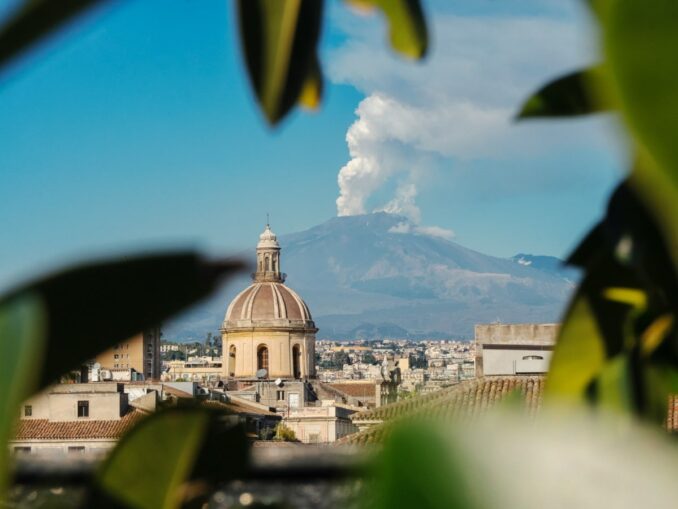
The cities in the eastern part of the island were practically destroyed. During their restoration, a separate architectural trend, the Sicilian Baroque, was born almost from the ashes.
The last major earthquake in Italy occurred on January 18, 2017. And it caused an avalanche that covered a hotel with guests in the province of Pescara.
On August 24, 2016, an earthquake in the Abruzzo region almost destroyed the ancient city of Amatrice, destroyed Norcia, and killed almost 300 people.
An amazing fact: tourists continue to climb Mount Etna today. Although the Sicilian slide erupts several times a year!
Traditions
Family is a fundamental value in Italy.
This does not just mean a “social unit” of mom, dad and children. And a broader concept that includes uncles and aunts, cousins and cousins, grandfathers and grandmothers.
Large family gatherings are not uncommon, but a well-established Italian tradition.
Children often live with their parents even after the age of 30. Even if they have a job and a decent income. And it doesn’t seem strange or unusual, as, for example, in Germany.
A significant number of large Italian corporations are still controlled by individual families. The automotive giant Fiat hails from Turin or Benetton, the Treviso emblem is a prime example of this.
In Italy, as in Spain, there is a siesta: in the middle of the day, it is customary to arrange a vacation. It is worth bearing in mind that from 13 to 15.30, even 16-17 hours, the institution that you intend to visit may not work.
This applies to churches, banks and shops, as well as cafes and restaurants.
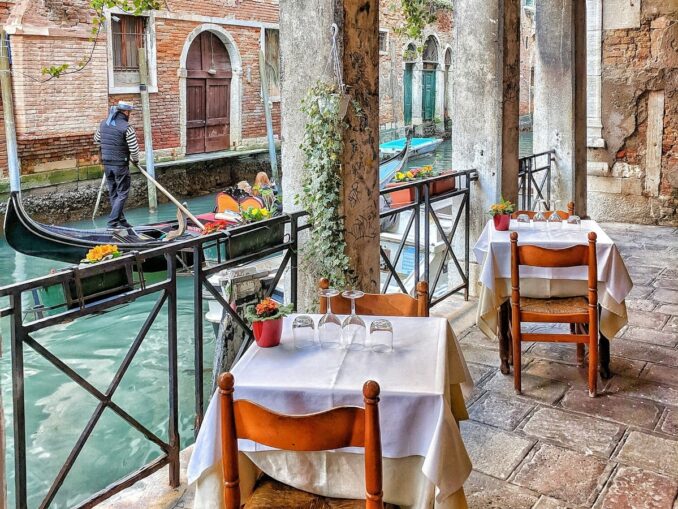
Thus, tourists often run the risk of going hungry. If he’s going to see a small town and doesn’t take any food with him.
Going to have a snack in the middle of the day, you may simply not find an open eateries. In the resorts and large cities in the north of the country, not everyone adheres to this tradition. But in the provinces and in the south of Italy it is in use.
Aiming to visit a church, even one as famous as Santa Maria della Salute in Venice, plan it for the first or second half of the day. Since it will almost certainly be closed “for lunch” in the middle.
There is Also
a certain problem with toilets in Italy – even in large cities there are few of them. Moreover, there is simply no question of free ones. And toll roads are roads.
For a one-time visit to such an institution, you sometimes have to pay up to 1.5-2 €.
In smaller cities, public toilets are an endangered species. So if you are going to visit Verona, for example, or Ferrara, be sure to plan a visit to some museum (toilets are free there!).
Customs
When greeting each other, Italians say buongiorno – “good afternoon.” When meeting acquaintances and friends, close people, as well as among young people, the word ciao or “hello” is more often used.
“Good evening” in Italian is buonasera. When saying goodbye, it is customary to say arriverderci, “goodbye.” Or, in the case of breaking up with friends, again – ciao.
Being late for an appointment is usually not considered a misdemeanor: an Italian can easily arrive 10-15 minutes after the appointed time. In the northern regions of the country, however, it is better to be punctual.
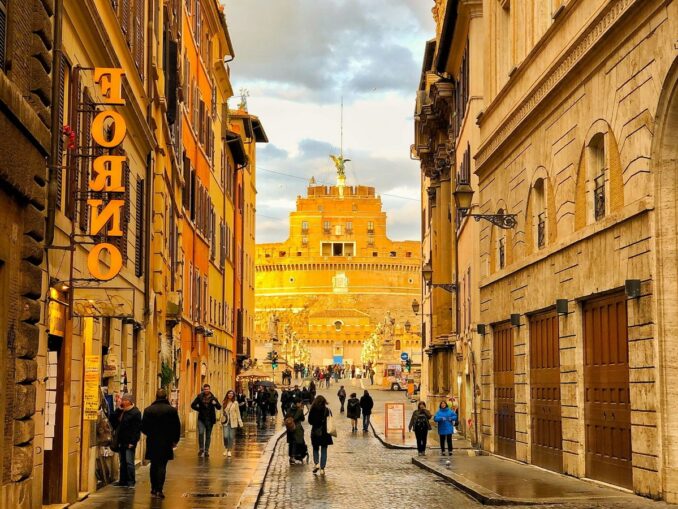
One should not be surprised at the pronounced expression of the interlocutor, rapid and loud speech, violent gestures – this is how they communicate here. Although not all of them.
Appearance is very important on first acquaintance.
At the same time, clothes do not have to be expensive and fashionable. To gain the respect or sympathy of an Italian, you need to look neat and, if possible, stylish.
Black still dominates women’s clothing. And I must say, it suits Italians: there are a lot of slender young ladies here, and a few are overweight.
It would seem that pasta and pizza should be the other way around. But no!
Food and Wine
If you give wine to Italians you know, don’t skimp and buy a good one. And not the canteen “for every day” that they like to sell on special offers in stores.
However, wine prices in Italy are not off the charts: 5-7 euros per bottle of a decent organoleptic drink is the norm!
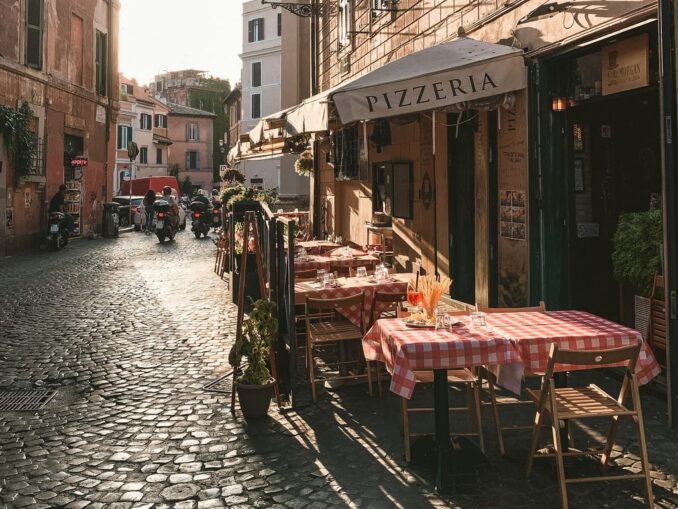
Pasta for every taste, and pizza are the most famous Italian dishes. However, not everywhere in Italy they are prepared in such a way that “you can lick your fingers.”
Pretentious establishments in the centers of tourist cities often serve very average-tasting dishes on the table. Frozen pizza bought at the supermarket, on the contrary, can be excellent!
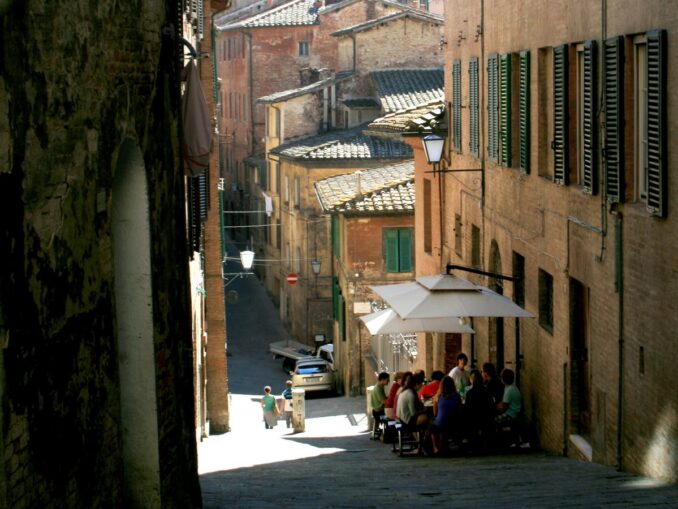
If you are in small towns, be sure to try the dishes in a small cafe or tavern on one of the side streets, where the locals eat. With a high degree of probability, the pasta here will be stretched by hand, and the pizza dough is prepared according to the old-fashioned recipes.
Superstitions
In Italy, it is not customary to give yellow flowers to someone, as they symbolize envy. And wrapping gifts in purple paper is considered to be bad luck.
The number 17 in Italy is traditionally considered unlucky. It doesn’t matter that 13 is in Russia, for example, or the USA.
Holidays
The annual carnival in Venice in February is the most famous such event in Europe. The tradition originated in the 13th century. The holiday is held annually at the end of winter and ends by the beginning of Lent, that is, 40 days before the Catholic Easter.
The Venice Carnival is a landmark event in winter Europe. So much so that it takes place with an incredible gathering of tourists.
The schedule of events can be found here – carnevale.venezia.it.
There is a famous carnival in the resort of Viareggio in Tuscany. The holiday takes place annually in late January – early March (dates vary depending on the year), and the main events are held on Saturdays and Sundays.
Carnival and the orange battle are held annually in the town of Ivrea in Piedmont. Festive events in Ivrea begin in January shortly after La Befana, which replaces the “Day of the Three Kings” here.
Interestingly, oranges for the February battle are imported from the south of the country, from Calabria.
The carnival in Putignano in Puglia is also very old. The longest and possibly the oldest in Italy. It starts right after Christmas and ends before Fat Thursday.
- What to buy in Italy as a gift to friends
- When and where are sales held in Italy
- Is it dangerous for single tourists to travel around Italy
© Eurotraveler