Rome in October and November 2026—is it worth visiting? Weather and reviews, air and water temperatures, what to wear, whether swimming is possible, and prices for hotels and tours. Eurotraveler tells you what to do and see in Rome during October and November, and where to go in the surrounding area.
Rome, like many other Western European cities, isn’t the most pleasant place in the world during the summer season. There’s just too much of everything: tourists, hustle and bustle, and heat.
Even in June, the weather in Rome doesn’t give you much chance to relax, reflect, and process your impressions. Often, after a day or two, you’re completely exhausted, suffering from the heat and noise. And by the third day, you don’t even want to hear about the Vatican Museums or the Colosseum.
Not to mention the even hotter months: July and August? When the weather sometimes gets so sweltering that even your thoughts seem to just melt away.
Roman autumn, especially late autumn, is free of such drawbacks.
Yes, in November, Rome isn’t always very warm; it can be rainy and damp. But those who have personally visited Italy’s capital in the summer will actually welcome this.
In most cases, the weather allows for plenty of walking and sightseeing: houses and ruins, streets, Romans, and rivers of tourists. Yes, the rivers are full in the fall, too. But at least they don’t overflow their banks!
By the way, if you visit Rome in October, you’ll see that it has even more to offer. Although, alas, it’s also more crowded, since it appeals to a much larger number of travelers.
But first things first!
The Weather in Rome in October
Statistically, things aren’t bad—the second month of autumn in the “Eternal City” is almost summer-like, pleasant and clear. The number of sunny days usually exceeds twenty, while the truly rainy ones can be counted on the fingers of one hand.
Rain is likely to get only the truly unlucky tourists thoroughly wet. In other years, it seems as though October in Rome is reluctant to rain at all. And the month doesn’t rank among the top three rainiest of the year.
So there seems to be no point in bringing a raincoat or even an umbrella on your trip. On the contrary, you’re better off leaving some space in your suitcase—you can bring back both food and non-edible souvenirs from Italy.
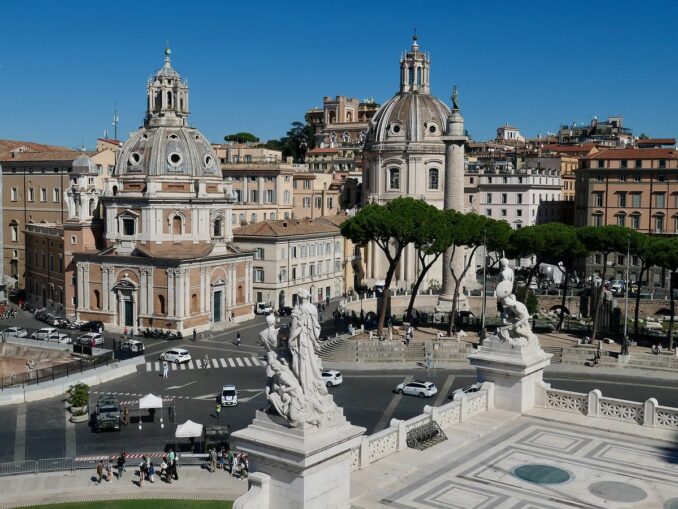
During the day in early October, temperatures in Rome consistently hover between 24–28 °C, while at night they drop to 16–20 °C. This means you can go on walking tours literally from dawn to dusk, as well as tackle challenging countryside excursions.
For those who love to take a dip, nothing stands in the way of a trip to one of Italy’s seaside resorts near Rome: Lido di Ostia or Anzio. Since the Tyrrhenian Sea off the coast is warmed up to an impressive 21–23°C in early October. And only by the end of the month does it cool down to 19–20°C.
By the way, the air temperature in Italy’s capital also drops by the end of October. So during the day, you’ll be strolling around in a modest but simply perfect 19–22°C.
Weather in Rome in November
But in the last month of autumn, the local climate stops pampering travelers. The air temperature drops to an average of +16–18 °C during the day; by the end of November, Rome has completely forgotten about warmth—outdoor thermometers start showing readings around +10–12 °C.
At night, the air cools to a tolerable 12–14 °C at first, but by December, it drops to 6–8 °C. Frosts, however, are a natural phenomenon unknown in autumn Rome.
But heavy downpours and biting winds against the backdrop of not-so-high air temperatures force you to bundle up in warm windbreakers. And then to write pitiful reviews—“oh, how unexpectedly unlucky”…
However, let’s emphasize that a level-headed tourist spending early November in Rome is sure to be satisfied. And why wouldn’t they—after all, the weather here is still practically velvety! Meanwhile, in northern Europe, icy rain is pouring down in full force, and in some places, wet snow is already falling.
What to Wear
What do people wear in Rome in early October? Tourists—mostly summer clothes, T-shirts and tank tops, shorts and skirts, sundresses. Italians themselves, even in warm weather, prefer to dress more stylishly and less casually—in blazers and jackets.
Starting in the second half of October, however, jackets and raincoats are no longer just a fashion accessory but a necessary item of clothing (especially in the mornings and evenings). And starting at the end of the month, you should also consider wearing a sweater.
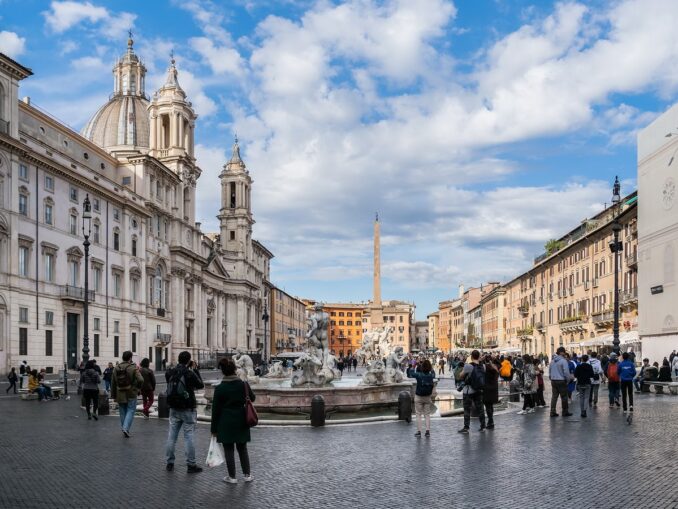
Also, in early November, it’s best to always have a raincoat and an umbrella on hand. And when getting dressed for a walk, always keep in mind the high likelihood of rain. During this period, powerful cool winds—almost hurricane-force—often sweep into Italy’s capital.
Prices for 2026
A trip to Rome from Fiumicino Airport seems like a real bargain. Since the cost of a ticket on the convenient Leonardo Express train has remained firmly at €14 for several years now. By the way, one child aged 4–12 traveling with one adult rides for free.
A bus ride from Fiumicino Airport to Rome costs half a price – from €7.
A single night’s stay in a decent hotel or apartment—though located far from the center of the “Eternal City” – will cost at least €130–140 in October. And slightly less than that (around €120 per night) if you’re in Rome in mid-November or later.
For short visits to Italy’s capital, we recommend the Titina B&B, a small hotel located near Tiburtina Station. It’s conveniently situated for both exploring Rome and traveling around Italy.
For those planning to visit the “Eternal City” for a decent number of days, it’s worth considering the affordable suburban guesthouse Una Chicca a Roma (less than half an hour by train to the center). In our opinion, it has very few competitors when you consider all its qualities.
Remember that in addition to the cost of your stay in Rome, you’ll have to pay a tourist tax (starting at €3.50 per person per night)!
What to See
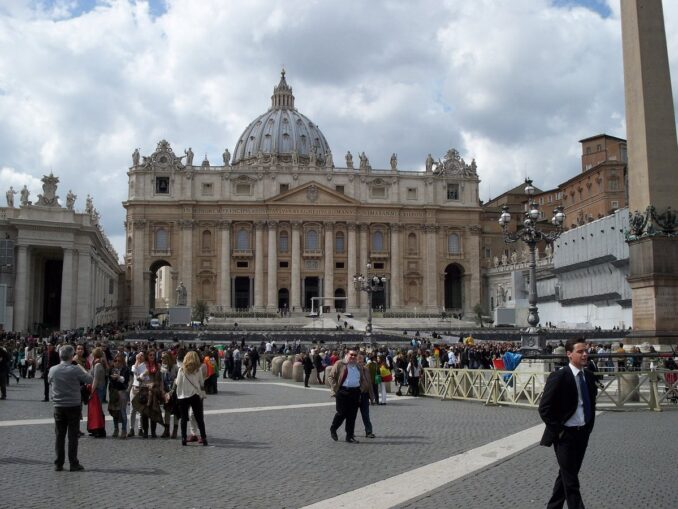
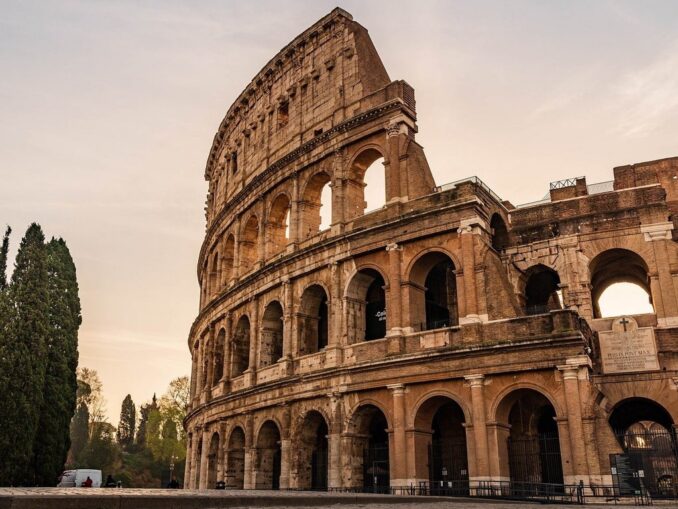
Whether you visit Rome in May or October, the list of “must-see” attractions will be roughly the same. The difference is that as winter approaches, the number of tourists dwindles, and the Colosseum and Roman Forum become much more accessible.
No long lines at all! And in the afternoon, you’ll likely be able to enter the famous ancient amphitheater after just a short wait.
That said, we recommend not getting too caught up in seeing Rome’s main attractions. Instead, explore a place with such immense atmosphere as the Appian Way. Take a stroll through the Orange Grove on the Aventine Hill and look at Rome through the “keyhole.”
Visit the incredible three-level Basilica of San Clemente. Marvel at the gathering of cats at Torre Argentina.
Visit Trajan’s Market, probably the world’s first department store. Visit the Lateran Basilica, have a cup of coffee in Piazza Navona, and pay a visit to one of Rome’s free museums—for example, the Museum of the Walls near the very beginning of the Appian Way…
Where to Go
In the surrounding area, be sure to check out these towns:
- Tivoli, famous for its villas: the Villa d’Este and Emperor Hadrian’s Villa
- Bracciano on the shores of the picturesque lake of the same name. The town’s main attraction is the Orsini-Odescalchi Castle
- Castel Gandolfo, home to the Pope’s summer residence
- the ancient Etruscan city of Orvieto in Umbria, surprisingly beautiful, somewhat surreal, and even fairy-tale-like
- Viterbo, with its beautifully preserved historic architecture, some of which dates back to the 12th–13th centuries
But, again, you don’t have to get hung up on all that. Just remember (or learn) that you can get from Rome to Naples in just one hour. And from there, you can go see Pompeii and Herculaneum.
The train ride between the capitals of Italy and Tuscany will take about 1.5 hours (at best). As for those who want to travel from Rome to Venice, they should prepare for a 2-day trip—the express train ride in one direction alone will take at least 4 hours.
- The best time to visit Rome
- How much does the metro cost in Rome and how to get around
- How to get from Rome to Florence by train
© Eurotraveler